
Peptides are becoming a popular topic in health, fitness, skincare, and scientific research. You may have heard about them while reading about muscle growth, weight management, skin health, or new medical treatments. But what are peptides, and why are scientists so interested in them?
In simple terms, peptides are short chains of amino acids, which are the small building blocks that make up proteins. They occur naturally in the human body and help regulate many important processes. Scientists can also create peptides in laboratories to study how they work or develop medicines for specific health conditions.
However, not all peptides do the same thing. Some have established medical uses, while others are still being studied, and their advertised benefits may not be supported by strong evidence.
This beginner’s guide to peptide science explains how peptides work, the different types, their potential benefits, how they compare with proteins, and what to know about peptide therapy and safety.
What Are Peptides?
Peptides are molecules made when amino acids join together in a chain. Amino acids are often described as the building blocks of proteins because they combine in different arrangements to create many substances the body needs.
Think of amino acids as individual beads. When several beads are connected, they form a short chain. That chain represents a peptide. Longer, more complex chains can form proteins.
The order of amino acids matters because it helps determine what a peptide does. One peptide may act as a messenger between cells, while another may have a completely different role.
Peptides can be produced naturally by the body, obtained from the breakdown of proteins during digestion, or manufactured in laboratories.
According to Health Canada’s overview of peptides, naturally occurring peptides help cells communicate and participate in processes such as hormone regulation, immune function, and tissue maintenance.
The important thing to remember is that peptides are a broad group of substances, not one specific treatment or supplement. Their effects depend on the particular peptide, how it behaves in the body, and the available scientific evidence.
How Do Peptides Work?
To understand how peptides work, imagine your body as a large communication network. Different cells and organs need to exchange information so that the body can function properly.
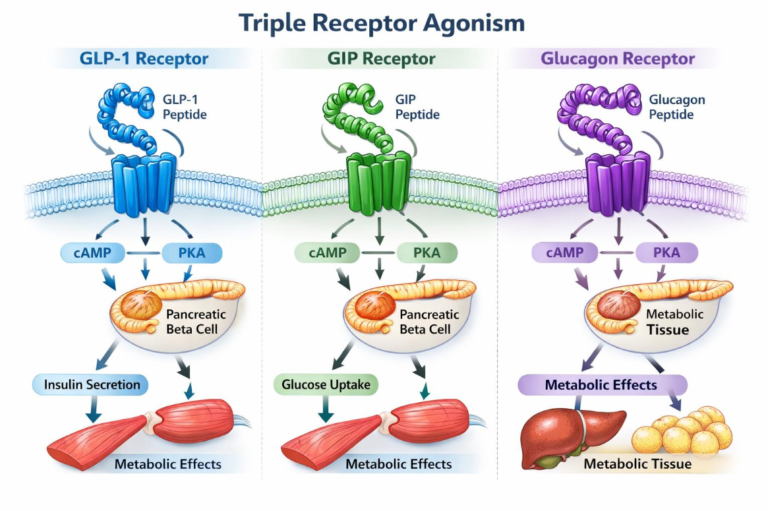
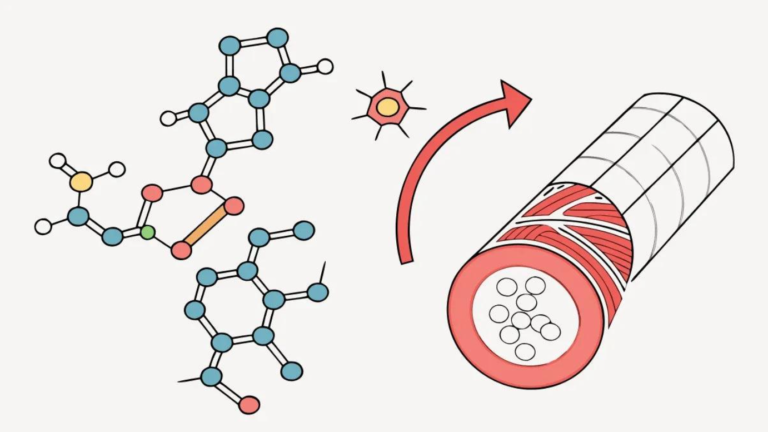
Some peptides act like tiny messages. They attach to specific structures on cells, known as receptors, and trigger a response. Other peptides have different roles, depending on their structure and where they act.
Here are three simple examples.
1. Peptides can act as chemical messengers
Certain peptides help cells communicate with one another. They may tell a cell to increase or decrease a particular activity.
Insulin is a well-known example. It is a peptide hormone that helps regulate blood glucose by supporting the movement of glucose from the bloodstream into cells.
2. Peptides can influence body processes
Some peptides participate in regulating appetite, digestion, hormone activity, and immune responses. Their effects depend on the signals they interact with and the tissues involved.
For example, glucagon-like peptide-1 (GLP-1) is a naturally occurring hormone involved in blood sugar regulation and appetite-related signalling. Medicines designed to act on the GLP-1 pathway are used for specific medical conditions.
3. Laboratory-made peptides can be studied for specific purposes
Scientists can manufacture peptides to investigate particular biological processes or develop medicines.
A laboratory-made peptide may resemble a natural substance or be designed to interact with a specific target in the body. However, creating a peptide does not automatically make it effective or safe for medical use.
Researchers must investigate each compound separately to understand its effects, possible side effects, and appropriate uses.
What Are Peptides Used For?
Peptides have several established and developing applications. The exact purpose depends on the substance and whether it has been adequately tested and authorized for that use.
Medical treatments
Some peptide-based medicines are used to manage specific health conditions. Insulin, for example, is an established treatment for diabetes. Certain GLP-1-based medicines are also approved for particular metabolic conditions.
These examples demonstrate that some peptides have important medical uses supported by clinical evidence. They do not mean that every peptide sold online has the same level of evidence or approval.
Skincare and cosmetics
Certain peptides are included in skincare products because researchers are investigating their potential effects on the appearance and condition of the skin.
Depending on the ingredient and formulation, skincare products may be marketed for concerns such as visible fine lines or skin firmness. However, results vary, and claims should be assessed against evidence for the specific ingredient rather than generalized to all peptides.
Scientific research
Researchers study peptides to understand how cells communicate, how hormones function, and how biological processes might be influenced by particular compounds.
Some research investigates metabolism, inflammation, tissue biology, and other areas. Findings from laboratory experiments do not necessarily translate into effective treatments in humans.
Supplements and other products
Some products contain peptide ingredients derived from proteins, including collagen peptides. These products differ from prescription peptide medicines and injectable research compounds.
Their effectiveness depends on the specific ingredient, intended purpose, product quality, and available evidence.
What Are the Different Types of Peptides?
There are many types of peptides, and scientists classify them in different ways according to their structure, source, or function. The following examples help illustrate the range.
1. Naturally occurring peptides
These peptides are made by living organisms, including humans. They participate in normal biological processes, such as communication between cells and hormone regulation.
Insulin is one example of a naturally occurring peptide hormone.
2. Synthetic peptides
Synthetic peptides are made using laboratory methods. Scientists may create them to study biological activity or develop potential medicines.
A synthetic peptide may resemble a natural peptide, but its effects and safety must be evaluated individually.
3. Peptide hormones
Some hormones are peptides. They carry signals that help coordinate activities across different organs and tissues.
Insulin is one example, while GLP-1 is another. These hormones have different functions, demonstrating why it is important not to treat all peptides as interchangeable.
4. Collagen peptides
Collagen peptides are smaller pieces of collagen produced by breaking down this structural protein. They are commonly found in certain dietary supplements and are studied for potential applications involving skin and connective tissue.
The evidence varies by intended outcome, and results from one collagen product or study cannot automatically be applied to every product.
5. Research peptides
Research peptides are compounds investigated in laboratory or scientific settings. Some are also discussed online in connection with fitness, recovery, or general wellness.
For example, BPC-157 and CJC-1295 appear in discussions of experimental peptide research. Their presence in scientific studies or commercial listings does not establish that they are safe or effective treatments for people.
Readers interested in the range of compounds listed by Hilma Elite can consult its peptide category. The category is a product listing, not evidence that every listed compound is approved for human use or supported by clinical research.
Peptides vs Proteins: What Is the Difference?
Peptides and proteins are closely related because both are made from amino acids. The main differences involve chain length, structure, and function.
| Feature | Peptides | Proteins |
|---|---|---|
| Basic structure | Shorter chains of amino acids | Usually longer, more complex amino acid chains |
| Shape | Varies with the peptide | Often folds into complex three-dimensional shapes |
| Function | Can act as signals or perform other biological roles | Can provide structure, transport substances, speed up reactions, and perform many other roles |
| Examples | Insulin and GLP-1 are peptide hormones | Collagen, haemoglobin, and many enzymes are proteins |
There is no single size cutoff used in every scientific context to distinguish peptides from proteins. Definitions can vary depending on the field and purpose.
A useful way to understand the relationship is to think of peptides as shorter amino acid chains and proteins as generally larger, more complex structures. Both are essential to biology, and both can have highly specialized functions.
What Are the Potential Peptide Benefits?
The phrase “peptide benefits” can be misleading because it makes a diverse group of compounds sound as though they all produce the same results.
In reality, the evidence depends on the individual peptide and the specific outcome being investigated.
Some peptide medicines have demonstrated benefits for approved medical uses through clinical trials and ongoing medical practice. Certain cosmetic peptides and collagen-derived products are also being studied for particular applications.
Other peptides promoted online for muscle growth, injury recovery, anti-ageing, or fat loss have limited human evidence or remain experimental. Results from animal studies or laboratory experiments cannot establish that a compound will provide the same benefit in people.
Before accepting a claim, consider three questions:
- Which peptide is being discussed? Different peptides can have very different effects.
- What evidence supports the claim? Human clinical trials generally provide more relevant evidence about human benefits and risks than laboratory experiments alone.
- Has the product been authorized for that use? A compound’s availability online does not establish its regulatory status or suitability for human use.
Reliable information should explain both what is known and what remains uncertain.
What Is Peptide Therapy?
Peptide therapy is a broad term used to describe treatments involving peptides. It can refer to established prescription medicines as well as experimental approaches promoted by some wellness providers.
The term alone does not tell you whether a treatment is effective, approved, or appropriate for a particular person.
For example, insulin is an established peptide-based medicine used to manage diabetes. Certain other peptide medicines are authorized for specific conditions following scientific evaluation.
In contrast, some injectable peptides marketed for wellness, performance, or recovery have not undergone sufficient human testing to establish their safety and effectiveness for those purposes.
Anyone considering a peptide-based treatment should speak with a qualified healthcare professional who can explain the evidence, approved uses, possible side effects, and available alternatives.
Are Peptides Safe?
Peptide safety varies considerably. It depends on the particular compound, its quality, how it is used, and the evidence available for its intended purpose.
Approved medicines are evaluated for quality, safety, and effectiveness for their authorized uses. Experimental or unapproved compounds may have much less information available about their effects in humans.
Potential concerns include:
- Allergic or other unwanted reactions.
- Uncertain long-term effects.
- Contamination or incorrect ingredients in products from unreliable sources.
- Risks associated with injections, including infection.
- Interactions with medicines or existing health conditions.
The US Food and Drug Administration provides information about the development and regulation of synthetic peptides in its guidance for industry.
It is also important to understand that a label stating “for research use only” does not mean a product has been approved for human consumption or treatment.
Do not assume that a peptide is safe simply because it occurs naturally in the body, is popular online, or is described as high purity. Anyone considering treatment should seek qualified medical advice rather than relying on online claims or self-experimentation.
Frequently Asked Questions About Peptides
Are peptides natural?
Some peptides are produced naturally by the body, while others are manufactured in laboratories. Natural origin alone does not guarantee safety, and synthetic origin does not automatically mean a substance is harmful.
Are peptides the same as proteins?
No. Both are made from amino acids, but peptides are generally shorter chains, while proteins tend to be larger and more structurally complex.
How do peptides work in the body?
Some peptides act as messengers that bind to specific cell receptors and influence biological processes. Others have different roles depending on their structure and function.
Are all peptides used as medicines?
No. Peptides may occur naturally, appear in cosmetics or supplements, serve as research compounds, or be developed into medicines. Each product must be evaluated according to its intended use and supporting evidence.
Do peptides help with muscle growth or recovery?
Some peptides are being investigated for biological processes related to muscle and tissue function. However, claims about faster recovery or greater muscle growth are not established for every compound. The evidence for a specific peptide must be assessed before drawing conclusions.
Is peptide therapy suitable for everyone?
No. Suitability depends on the individual, the specific medicine or compound, the intended purpose, and the available evidence. Speak with a qualified healthcare professional before considering a peptide-based treatment.
Conclusion: Understanding Peptides Starts With the Science
Peptides are small chains of amino acids that play important roles in biology. They can act as messengers, help regulate body processes, and serve as the basis for certain medicines and research compounds.
Understanding what peptides are is only the first step. It is equally important to understand that different peptides have different functions, levels of scientific evidence, and safety considerations.
Some peptide-based medicines have established medical uses, while many compounds promoted online remain experimental for the uses advertised. The most reliable approach is to look beyond marketing claims, examine the evidence for the specific substance, and consult qualified professionals when making health-related decisions.
For further reading, explore Health Canada’s peptide overview and the US FDA’s information on synthetic peptides. These resources offer useful background for anyone beginning to learn about peptide science.
Medical disclaimer: This article is for general educational purposes only. It is not medical advice and does not recommend using any research compound to diagnose, treat, cure, or prevent a disease.