
Mitochondria are often called the powerhouses of cells because they help produce the energy our bodies need to function. However, scientists are discovering that these tiny structures do more than help supply energy. They can also produce small molecules that help cells respond to changes and maintain normal biological activity.
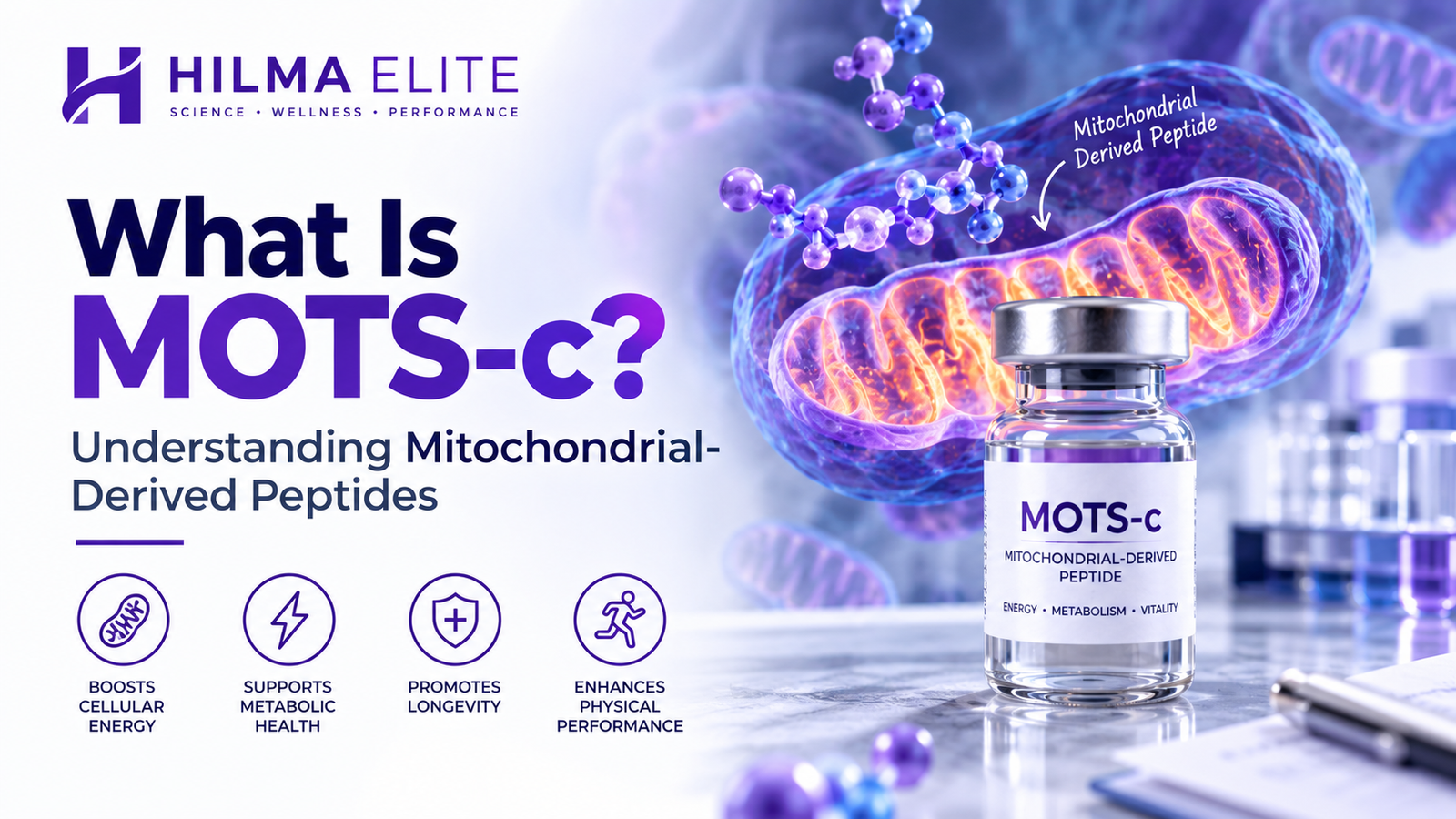
One of these molecules is MOTS-c, a small peptide that has attracted scientific interest because of its possible role in metabolism, energy regulation, and the body’s response to stress.
But what is MOTS-c, how does it work, and what have researchers actually discovered about it?
In this beginner-friendly guide, we explain the science behind MOTS-c, its proposed benefits, its mechanism of action, and how it compares with HNG. We will also examine the important limitations of current research and why findings from laboratory studies should not be confused with proven health benefits in humans.
What Is MOTS-c?
MOTS-c stands for mitochondrial open reading frame of the 12S rRNA type-c. Although the name sounds complicated, the basic idea is relatively simple.
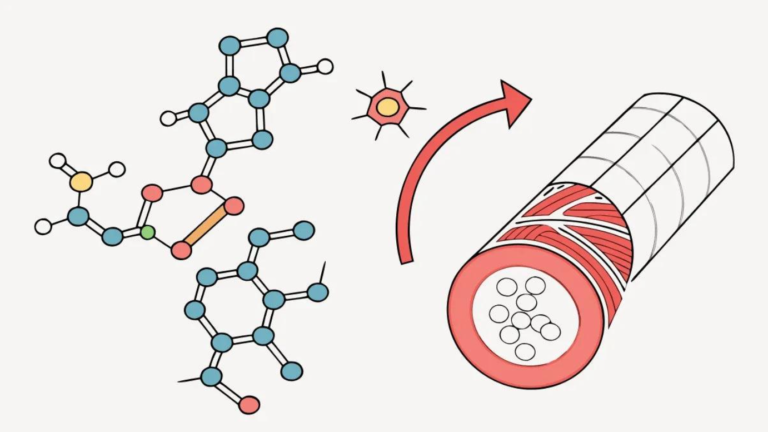
MOTS-c is a short chain of 16 amino acids. Amino acids are the building blocks that form peptides and proteins. What makes MOTS-c unusual is that its genetic instructions are found in mitochondrial DNA rather than in the main DNA housed inside a cell’s nucleus.
Mitochondrial DNA is the small amount of genetic material found inside mitochondria. Scientists originally understood mitochondria mainly in terms of their role in energy production, but research has revealed that mitochondrial genes can also provide instructions for certain small peptides.
MOTS-c belongs to a group known as mitochondrial-derived peptides (MDPs). These peptides are being studied for their potential roles in communication between mitochondria and other parts of the cell.
A major study published in Cell Metabolism in 2015 identified MOTS-c and reported effects related to metabolic regulation in experimental models. Since then, researchers have investigated how it may influence the way cells respond to changes in energy availability.
You can read the original research in Cell Metabolism.
The key point is that MOTS-c is a scientifically interesting peptide, but much of the evidence about its possible health applications remains experimental.
What Are Mitochondrial-Derived Peptides?
To understand MOTS-c properly, it helps to know what mitochondrial-derived peptides are.
Mitochondria are structures inside cells that help turn nutrients into usable energy. They are involved in several other processes, including communication within cells and responses to certain forms of stress.
Researchers have identified several small peptides encoded by mitochondrial DNA. These include MOTS-c, humanin, and a group called small humanin-like peptides, or SHLPs.
Although they belong to the same broad family, they are not identical. Each has a different structure and may interact with biological processes in different ways.
Think of mitochondrial-derived peptides as small biological messages that researchers are investigating to understand how cells adapt to changing conditions.
Some studies suggest that these peptides may influence energy use, cellular protection, and responses to stress. However, their functions are still being investigated, and the findings for one peptide cannot automatically be applied to another.
For a more detailed scientific overview, see this review of mitochondrial-derived peptides in energy metabolism.
How Does MOTS-c Work?
The question of how MOTS-c works is central to current research. Scientists have identified several processes that may help explain its biological activity.
The details are complex, but the main ideas can be understood without an advanced scientific background.
1. It may influence how cells manage energy
Cells constantly adjust how they use available energy. Their needs can change during exercise, periods of reduced nutrient availability, and other forms of stress.
Research suggests that MOTS-c can influence pathways involved in this adjustment. In particular, scientists have studied its relationship with a protein called AMPK, which acts somewhat like an energy sensor inside cells.
When a cell’s energy supply is under pressure, AMPK helps coordinate responses that support energy balance.
In experimental studies, MOTS-c has been linked to changes in this system. However, researchers are still investigating how these effects translate into whole-body outcomes in humans.
2. It may affect metabolic signalling
Metabolism refers to the chemical processes through which the body uses and stores energy. These processes include how cells handle nutrients such as glucose and how the body responds to changes in energy demand.
Studies suggest that MOTS-c can affect pathways associated with glucose handling and insulin sensitivity in experimental models.
Insulin is a hormone that helps regulate blood sugar. Insulin sensitivity describes how effectively the body’s cells respond to insulin.
Researchers are interested in MOTS-c because these pathways are important for understanding metabolic health. Nevertheless, experimental findings do not establish that MOTS-c can prevent or treat diabetes in people.
3. It may help cells respond to stress
Cells face different kinds of stress, including changes in energy supply and conditions that affect normal cellular activity.
Research indicates that MOTS-c may move into the cell nucleus under certain forms of stress and influence the activity of genes involved in the response.
The nucleus contains most of a cell’s genetic instructions. By influencing gene activity, MOTS-c may help coordinate how a cell responds to changing conditions.
These findings are part of a developing area of research into communication between mitochondria and the cell nucleus.
A detailed explanation is available in this 2023 review of MOTS-c mechanisms and research.
What Are the Potential MOTS-c Benefits?
The phrase “MOTS-c benefits” is frequently used in discussions of metabolic health, exercise, and ageing. It is important, however, to distinguish potential research applications from benefits demonstrated in human clinical trials.
Metabolic regulation
One major area of interest is the role MOTS-c may play in metabolic regulation.
Animal and laboratory research has investigated whether MOTS-c influences how the body responds to nutrients, manages energy, and maintains insulin sensitivity.
These findings may help researchers better understand metabolic processes. They do not establish MOTS-c as an effective treatment for metabolic disorders.
Exercise and physical performance
Researchers have also investigated connections between MOTS-c, exercise, and the body’s response to physical stress.
Some studies suggest that exercise can influence the body’s natural MOTS-c activity. Experimental research has also examined whether MOTS-c affects processes associated with skeletal muscle function.
However, this does not prove that taking a manufactured MOTS-c peptide improves endurance, strength, or recovery in humans.
Ageing and cellular health
Ageing is associated with changes in metabolism and the function of various cellular systems. Researchers are exploring whether mitochondrial-derived peptides help explain some of these changes.
MOTS-c has attracted attention because of its potential role in cellular stress responses and energy regulation.
At present, it would be inaccurate to describe MOTS-c as a proven anti-ageing treatment or claim that it extends human lifespan.
Insulin sensitivity
Another research area concerns insulin sensitivity and glucose regulation.
Studies in experimental models have reported changes in insulin-related pathways following MOTS-c exposure. Such findings may help researchers investigate new approaches to understanding metabolic disease.
However, more evidence is needed to establish its safety, effectiveness, and potential medical applications in humans.
In summary: MOTS-c has several promising research directions, but potential benefits should not be confused with established clinical outcomes.
What Is the MOTS-c Mechanism of Action?
The MOTS-c mechanism of action refers to the biological steps through which the peptide may influence cells.
One pathway frequently discussed in the research involves folate metabolism, the production of certain building blocks needed by cells, and AMPK activation.
Here is a simplified explanation:
- Changes in cellular processes: MOTS-c can affect the folate cycle and the production of purines, which are substances cells need to make DNA and other important molecules.
- Changes in cellular energy signals: These effects can influence levels of AICAR, a molecule involved in signalling pathways associated with AMPK.
- AMPK activation: AMPK helps cells respond to changes in energy availability and coordinates several metabolic processes.
- Changes in cell activity: Researchers investigate how these signals affect glucose handling, energy balance, and cellular stress responses.
This is a simplified description of a proposed mechanism based largely on experimental research. It does not mean that MOTS-c produces predictable results in every tissue or that all of its biological effects are fully understood.
The exact pathways involved may also depend on the experimental conditions and biological system being studied.
MOTS-c vs HNG: What Is the Difference?
MOTS-c and HNG are both discussed in research involving mitochondrial-derived peptides, but they are different compounds.
HNG generally refers to S14G-humanin, a modified form of the peptide humanin. Humanin is another mitochondrial-derived peptide, originally identified through research into cell survival and protective cellular responses.
The key difference is that MOTS-c is primarily studied in connection with metabolic regulation and energy-related signalling, while humanin and HNG have been investigated particularly for their possible roles in cellular protection and survival.
| Feature | MOTS-c | HNG |
|---|---|---|
| Full name | Mitochondrial open reading frame of the 12S rRNA type-c | S14G-humanin |
| Relationship | Mitochondrial-derived peptide | Modified form of humanin |
| Main research interests | Metabolic regulation, AMPK signalling, and cellular stress responses | Cell survival, cellular protection, and related signalling |
| Research status | Experimental; human applications remain insufficiently established | Experimental; human applications remain insufficiently established |
Both peptides have shown biological activity in experimental research. A 2026 study examined MOTS-c and HNG in cultured human skeletal muscle cells exposed to a drug associated with muscle wasting. The results provide an example of why researchers are interested in these compounds, but cell-culture findings do not demonstrate that either peptide prevents muscle loss in people.
You can read the study in Physiological Reports.
Neither peptide should be assumed to be a substitute for an approved medical treatment, and the evidence does not establish which is better for a particular health or performance goal.
Is MOTS-c Approved for Human Use?
This is an important question because scientific interest and commercial availability can sometimes make an experimental compound appear more established than it is.
MOTS-c remains an investigational peptide for the health and performance applications commonly discussed online. Evidence from laboratory studies and animal experiments is not enough to establish its safety and effectiveness as a human treatment.
The US Food and Drug Administration provides general information about compounding and the regulatory considerations for certain bulk drug substances.
Regulatory status depends on the country, product, and intended use. Readers should consult the relevant medicines regulator for current information rather than assuming that a product is authorized because it is sold online.
If a product is labelled for laboratory research only, that designation should be taken seriously. It is not evidence that the product is suitable for human consumption or injection.
What Should You Know About MOTS-c Research Products?
Research products are not the same as approved medicines. A product’s advertised purity, availability, or description does not establish its safety or effectiveness for a health-related purpose.
Anyone reading about MOTS-c should consider the quality of the evidence, the product’s intended use, and the limitations of current research.
For educational reference, the MOTS-c product listing on Hilma Elite describes a research product. The listing should not be interpreted as proof of clinical benefits or authorization for human treatment.
Before making health-related decisions, consult a qualified healthcare professional and rely on evidence from appropriate human studies and recognized regulatory authorities.
Frequently Asked Questions About MOTS-c
What is MOTS-c in simple terms?
MOTS-c is a short peptide encoded by mitochondrial DNA. Researchers study it because it may influence how cells manage energy, respond to stress, and regulate metabolic processes.
How does MOTS-c work?
Research suggests that MOTS-c influences cellular energy signalling, including pathways involving AMPK. Scientists are still investigating its full mechanism of action and its relevance to human health.
What are the main MOTS-c benefits?
Potential research applications include metabolic regulation, insulin sensitivity, exercise-related responses, and cellular stress adaptation. These are research interests rather than established benefits of taking MOTS-c in humans.
Is MOTS-c the same as humanin?
No. Both are mitochondrial-derived peptides, but they have different amino acid sequences and have been investigated for different biological functions.
What is the difference between MOTS-c and HNG?
MOTS-c is associated with research into metabolic signalling, while HNG is a modified form of humanin studied for cellular protection and survival. Both remain experimental for many of the applications promoted online.
Is MOTS-c a proven anti-ageing treatment?
No. Researchers are investigating its relationship with ageing and cellular function, but there is not sufficient clinical evidence to establish MOTS-c as a proven anti-ageing treatment in humans.
Conclusion
MOTS-c is an intriguing discovery in mitochondrial biology. As a mitochondrial-derived peptide, it has given researchers another way to investigate how cells communicate, respond to stress, and regulate energy-related processes.
Research has linked MOTS-c to pathways involving AMPK, glucose handling, and metabolic regulation. Scientists are also investigating its relationship with exercise, ageing, and other aspects of cellular function.
However, many of these findings come from laboratory and animal studies. More high-quality human research is needed to determine whether MOTS-c has safe and effective clinical applications.
For beginners, the most important takeaway is simple: MOTS-c is a promising research subject, not a proven solution for metabolic problems, athletic performance, or ageing. Understanding the difference between early scientific findings and established medical evidence is essential when exploring emerging peptide science.
Medical disclaimer: This article is for educational purposes only and is not medical advice. It does not recommend using MOTS-c or any other experimental peptide to diagnose, treat, cure, or prevent a disease.