
🚚 Fast & Discreet Delivery
Semaglutide vs. Tirzepatide: Which Weight Loss Treatment Is Right for You in 2026?
Learn the differences between Semaglutide and Tirzepatide, how they work, their benefits, side effects, and which may be more suitable for your goals.

Interest in medical weight management has grown rapidly over the past few years, and two names appear in almost every discussion: Semaglutide and Tirzepatide. Both medications have helped many people achieve meaningful weight loss when combined with healthy eating, regular physical activity, and medical supervision.
If you’re researching your options, you’ve probably asked questions such as:
- Which treatment leads to greater weight loss?
- What are the main differences?
- Which one works faster?
- Are the side effects the same?
- Which option might be more suitable for my goals?
This guide answers those questions using current scientific evidence and explains the similarities and differences in a way that’s easy to understand.
Whether your goal is improving metabolic health, managing obesity, or simply learning about modern weight-loss therapies, understanding how these treatments work can help you have a more informed discussion with a healthcare professional.
Quick Comparison: Semaglutide vs. Tirzepatide
| Feature | Semaglutide | Tirzepatide |
|---|---|---|
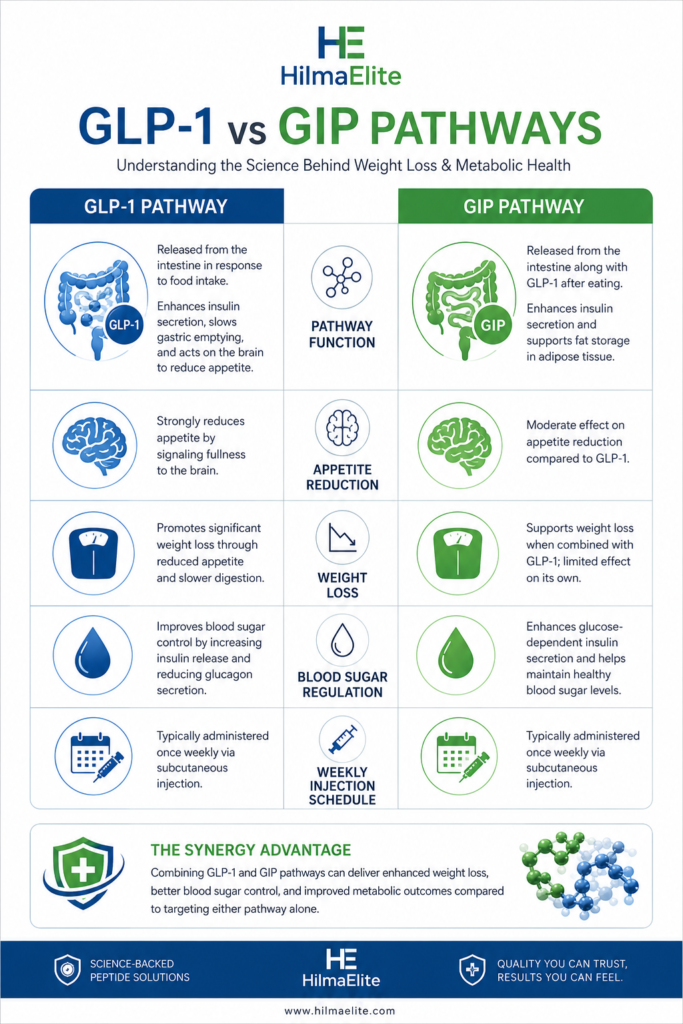
| Drug Class | GLP-1 receptor agonist | Dual GIP and GLP-1 receptor agonist |
| Primary Action | Reduces appetite and slows stomach emptying | Reduces appetite while also improving metabolic regulation through two hormone pathways |
| Administration | Weekly injection | Weekly injection |
| Appetite Control | Excellent | Excellent |
| Average Weight Loss | Significant | Often greater in clinical studies |
| Blood Sugar Support | Yes | Yes |
| Lifestyle Changes Needed | Yes | Yes |
Key takeaway: Both medications can be effective tools for weight management, but they work slightly differently. Tirzepatide activates two hormone receptors, whereas Semaglutide primarily targets one.
What Is Semaglutide?
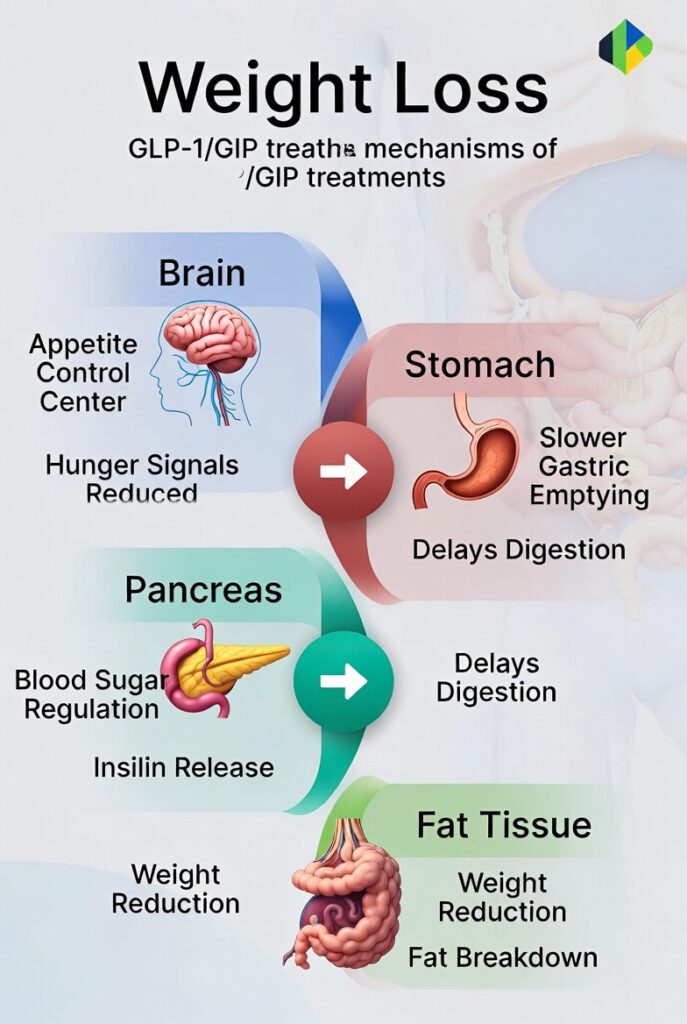
Semaglutide belongs to a group of medicines known as GLP-1 receptor agonists. It mimics a naturally occurring hormone called glucagon-like peptide-1 (GLP-1), which is released after eating.
GLP-1 helps regulate several important processes involved in weight management by:
- Increasing feelings of fullness
- Reducing hunger signals
- Slowing stomach emptying
- Supporting healthy blood glucose regulation
Because people tend to feel satisfied with smaller meals, many naturally reduce their calorie intake without constantly feeling hungry.
Semaglutide has become one of the most widely studied medications for obesity and type 2 diabetes, with numerous clinical trials demonstrating meaningful weight reduction alongside lifestyle interventions.
For readers who are new to peptide-based therapies, our What Are Peptides? Beginner’s Guide explains the science behind therapeutic peptides and how they work within the body.
What Is Tirzepatide?
Tirzepatide represents a newer generation of metabolic therapy.
Unlike Semaglutide, Tirzepatide activates two different hormone receptors:
- GLP-1 (Glucagon-Like Peptide-1)
- GIP (Glucose-Dependent Insulinotropic Polypeptide)
Because it targets both pathways, researchers believe Tirzepatide may produce stronger effects on appetite regulation and metabolic function in many individuals.
This dual mechanism has generated significant interest among clinicians and researchers. The SURMOUNT-1 clinical trial reported substantial weight reduction in adults living with obesity or overweight when combined with diet and exercise.
If you’re interested in exploring available options, browse our Weight Loss Collection to learn more about peptide-based therapies.
Although both medications are administered once weekly, their biological mechanisms differ, which helps explain why clinical outcomes may vary between individuals.
How Do These Treatments Help With Weight Loss?
Despite working through slightly different mechanisms, both medications share several important effects:
- They help reduce hunger.
- They increase feelings of fullness after meals.
- They may decrease food cravings.
- They encourage lower calorie intake naturally.
- They support healthier blood sugar regulation.
Rather than forcing rapid weight loss, these therapies help create conditions that make maintaining a calorie deficit easier over time.
For a deeper understanding of how peptide therapies support weight management, read our Weight Loss Peptides Explained guide.
However, neither medication should be viewed as a substitute for healthy nutrition, regular physical activity, adequate sleep, and long-term lifestyle changes. Sustainable weight management typically requires a combination of medical guidance and healthy habits. The CDC’s healthy weight resources emphasize that long-term success comes from combining medical treatment with sustainable lifestyle changes.
Which Treatment Produces Greater Weight Loss?
This is one of the most common questions people ask—and it’s also one of the most important.
The answer is not simply “one is always better.” Both Semaglutide and Tirzepatide have demonstrated substantial weight loss in large clinical studies. However, research to date suggests that Tirzepatide has, on average, produced greater weight reduction than Semaglutide in comparable populations.
That does not mean Tirzepatide is automatically the right choice for everyone. Factors such as medical history, tolerance, cost, availability, and your healthcare provider’s recommendations all play an important role.
For many people, either treatment can be highly effective when paired with healthy eating habits, regular physical activity, and long-term lifestyle changes.
What Does the Research Show?
Large clinical trials have changed the way obesity is treated by demonstrating that modern GLP-1-based therapies can lead to meaningful and sustained weight loss.
Studies evaluating Semaglutide have shown significant average weight reduction in adults with obesity or overweight when combined with lifestyle modifications, as demonstrated in the STEP clinical trials.
More recent research involving Tirzepatide has reported even greater average weight-loss outcomes in many participants, findings that are supported by the SURMOUNT clinical trials.
It is important to remember that these are average results from clinical trials. Individual responses vary considerably. Some people respond exceptionally well to Semaglutide, while others may experience better outcomes with Tirzepatide.
Successful weight management depends on many factors, including:
- Consistency with treatment
- Nutrition
- Physical activity
- Sleep quality
- Stress management
- Existing medical conditions
- Individual biology
No medication can replace healthy lifestyle habits, but they may make those habits easier to maintain. For a broader overview of peptide-based therapies used in weight management, read our Weight Loss Peptides Explained guide.
Semaglutide vs. Tirzepatide: Mechanism of Action
Although both medications help reduce appetite, they do so slightly differently.
Semaglutide
Semaglutide primarily works by activating the GLP-1 receptor.
This leads to:
- Reduced hunger
- Increased fullness after meals
- Slower stomach emptying
- Improved blood glucose regulation
- Lower overall calorie intake
For many individuals, this translates into gradual, sustainable weight loss when combined with dietary changes.
Tirzepatide
Tirzepatide activates two hormone pathways:
- GLP-1
- GIP
Researchers believe this dual action may improve:
- Appetite regulation
- Insulin response
- Energy balance
- Metabolic efficiency
While scientists continue to study exactly how these pathways interact, current evidence suggests this dual mechanism contributes to the strong weight-loss results observed in clinical trials.
Advantages of Semaglutide
Semaglutide has become one of the most extensively studied weight-management medications available.
If you’d like to explore available options, browse our Semaglutide products .
Potential advantages include:
- Extensive long-term research
- Strong evidence supporting weight reduction
- Weekly dosing schedule
- Significant appetite suppression
- Established use in both obesity and type 2 diabetes management
Many healthcare professionals are familiar with its use, making it an important option for appropriate patients.
Advantages of Tirzepatide
Tirzepatide has attracted considerable attention because of its dual hormone activity.
Learn more by exploring our Tirzepatide products .
Potential advantages include:
- Dual GIP and GLP-1 receptor activation
- Excellent appetite control
- Strong weight-loss outcomes in clinical trials
- Weekly administration
- Improved metabolic regulation
Its unique mechanism makes it an exciting advancement in obesity treatment, although research continues as more long-term data become available.
Common Side Effects
Like many medications, both treatments may cause side effects.
The most commonly reported include:
- Nausea
- Vomiting
- Diarrhea
- Constipation
- Reduced appetite
- Stomach discomfort
- Indigestion
These effects are generally most noticeable during the early stages of treatment or after dose increases and often improve over time.
Not everyone experiences side effects, and their severity varies from person to person. Readers interested in official prescribing details can review the FDA prescribing information.
Safety Considerations
Both medications should be used only under the supervision of a qualified healthcare professional, in line with guidance from organizations such as the American Diabetes Association.
Before starting treatment, discuss your complete medical history, including:
- Previous digestive disorders
- Pancreatic disease
- Gallbladder conditions
- Kidney problems
- Current medications
- Family history of certain endocrine disorders
Promptly seek medical attention if you experience severe or persistent symptoms while receiving treatment.
Following the prescribed dosing schedule and attending regular medical follow-up appointments can help improve both safety and effectiveness. Additional information on healthy weight management is available from the National Institute of Diabetes and Digestive and Kidney Diseases (NIDDK).
Who Might Benefit From Semaglutide?
A healthcare professional may consider Semaglutide for adults who:
- Are living with obesity or overweight and meet clinical criteria
- Need additional support alongside diet and exercise
- Prefer a treatment with extensive long-term clinical data
- May also require improvements in blood glucose management
To explore available options, visit our Weight Loss Collection.
The decision should always be individualized based on a complete medical evaluation.
Who Might Benefit From Tirzepatide?
Depending on individual circumstances, Tirzepatide may be considered for adults who:
- Meet the clinical criteria for treatment
- Are looking for an option with dual hormone receptor activity
- May benefit from its metabolic effects
- Have discussed the potential benefits and risks with their healthcare provider
You can also browse our Weight Loss Collection to learn more about related therapies.
The most appropriate treatment varies from person to person, and there is no single medication that is best for everyone.
Quick Comparison: Pros and Considerations
| Feature | Semaglutide | Tirzepatide |
|---|---|---|
| Clinical Experience | Extensive long-term data | Newer but growing evidence |
| Hormone Targets | GLP-1 | GLP-1 + GIP |
| Weekly Injection | ✓ | ✓ |
| Appetite Control | Excellent | Excellent |
| Average Weight Loss | Significant | Often greater in clinical studies |
| Lifestyle Changes Required | Yes | Yes |
| Medical Supervision Required | Yes | Yes |
Frequently Asked Questions
Is Tirzepatide better than Semaglutide for weight loss?
Clinical studies have generally found that Tirzepatide produced greater average weight loss than Semaglutide in many participants. However, the “better” option depends on individual factors such as medical history, treatment goals, tolerability, availability, and a healthcare professional’s recommendation. The findings from the SURMOUNT-1 clinical trial provide additional insight into Tirzepatide’s effectiveness.
How long does it take to see results?
Results vary between individuals. Many people begin noticing changes within the first few weeks, but meaningful weight loss usually develops gradually over several months when treatment is combined with healthy eating, physical activity, and long-term lifestyle changes.
To better understand how these therapies support sustainable weight management, read our Weight Loss Peptides Explained guide.
Do I need to exercise while using these treatments?
Yes. Neither medication replaces a healthy lifestyle. Clinical studies consistently show that combining treatment with a balanced diet, regular exercise, adequate sleep, and healthy habits leads to the best long-term outcomes. The CDC’s physical activity recommendations provide practical guidance on maintaining an active lifestyle.
Can these treatments help reduce appetite?
Yes. Both medications are designed to influence hormones involved in appetite regulation and satiety, helping many people feel fuller for longer and consume fewer calories.
If you’re new to peptide-based therapies, our What Are Peptides? Beginner’s Guide explains how these treatments work within the body.
Are the side effects permanent?
Most commonly reported side effects, such as nausea or digestive discomfort, are often temporary and may improve as the body adjusts to treatment. If symptoms are severe or persistent, medical advice should be sought promptly. Readers can also review the FDA prescribing information for additional safety information.
Which treatment should I choose?
There is no universal answer. The most appropriate treatment depends on your overall health, medical history, personal goals, and guidance from a qualified healthcare professional. A personalized evaluation is the best way to determine which option may be appropriate for you.
If you’re exploring available options, browse our Weight Loss Collection to learn more about peptide-based therapies.
Final Thoughts
Semaglutide and Tirzepatide represent important advances in the medical management of obesity and overweight. Both therapies have demonstrated meaningful benefits in clinical research when combined with lifestyle modifications.
Semaglutide has an extensive body of long-term evidence and remains a widely used option for eligible patients. Tirzepatide, with its dual GIP and GLP-1 receptor activity, has shown particularly strong weight-loss results in clinical trials and continues to generate significant interest within the medical community.
Ultimately, successful weight management extends beyond any single medication. Long-term success is built on sustainable nutrition, regular physical activity, quality sleep, stress management, and ongoing medical support. The National Institute of Diabetes and Digestive and Kidney Diseases (NIDDK) offers additional evidence-based resources on healthy weight management.
If you’re considering either treatment, consult a qualified healthcare professional to discuss the potential benefits, risks, and whether it aligns with your individual health needs.
To continue learning, visit the HilmaElite Blog, where you’ll find evidence-based articles on peptides, HGH, and weight management. You can also explore our Weight Loss Collection for related products and educational resources.