
🚚 Fast & Discreet Delivery
What Are Peptides? A Complete Beginner’s Guide
Peptides are short chains of amino acids that act as powerful signaling molecules in the body. From supporting tissue repair to enhancing recovery and performance, they offer targeted benefits. This guide explains the basics, types, uses, and key considerations for beginners.

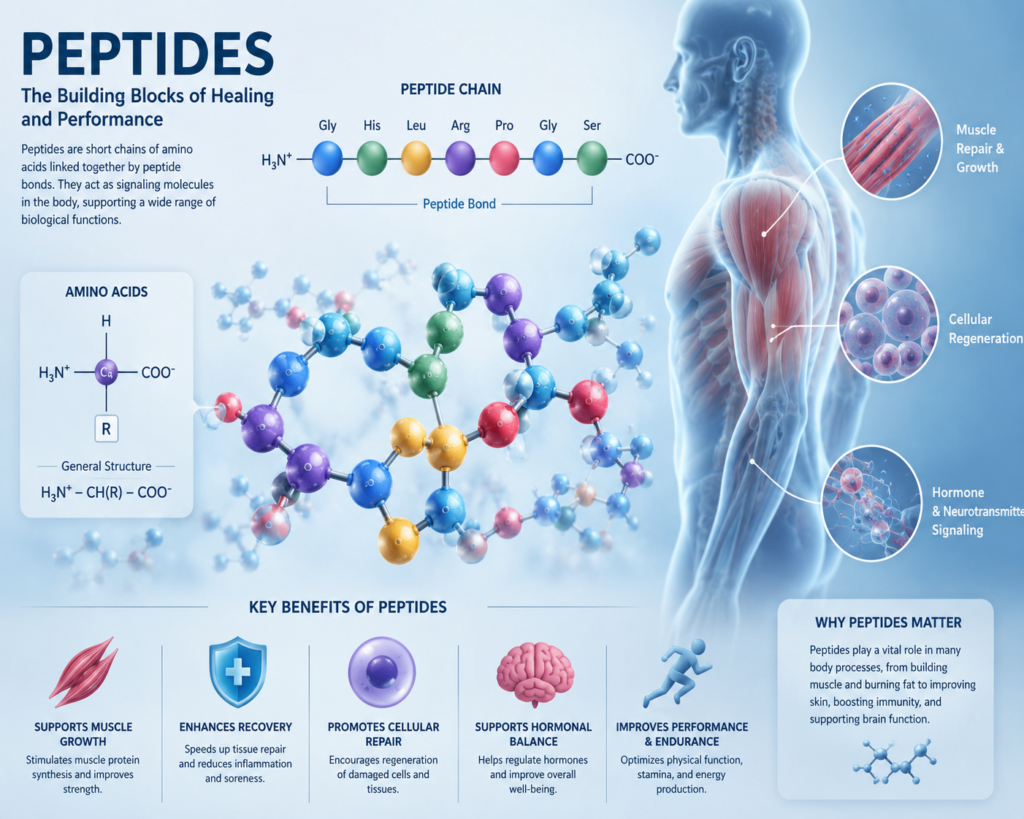
What are Peptides:
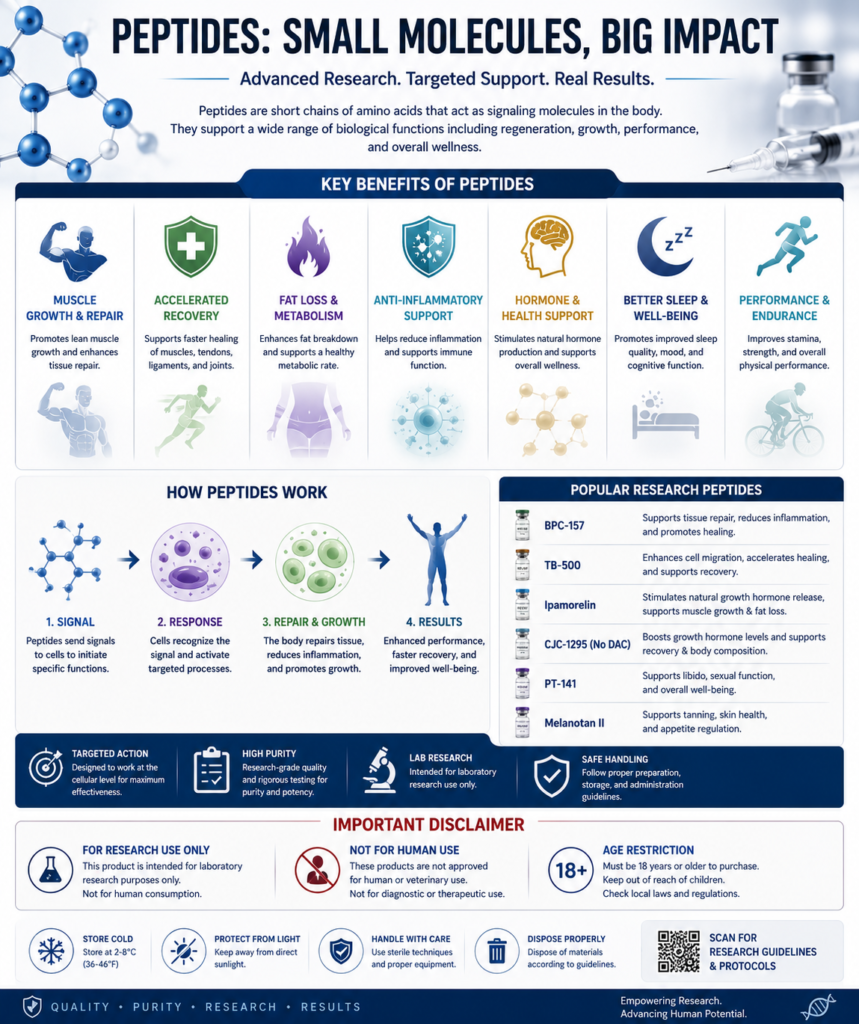
Peptides are short chains of amino acids linked together by peptide bonds. They serve as important signaling molecules in the body, helping regulate hormone release, tissue repair, inflammation, and metabolism.
Unlike full-length proteins, peptides typically contain 2 to 50 amino acids. This compact structure allows them to interact precisely with cell receptors.
Table of Contents
- What Exactly Are Peptides?
- How Do Peptides Work?
- Main Types of Peptides
- Key Benefits Backed by Research
- Popular Peptides at HilmaElite
- Beginner Usage Guidelines
- Safety and Legal Considerations
- FAQs
- Conclusion
What Exactly Are Peptides?
Peptides occur naturally in many foods and are produced by the human body. Bioactive peptides can influence various physiological processes once released from larger proteins. Read more on peptide biochemistry from NCBI.
In modern research, synthetic peptides are studied extensively. According to a comprehensive review published in Signal Transduction and Targeted Therapy, over 80 peptide drugs have been approved globally, with many more in clinical development. View the full therapeutic peptides review.
If you’re interested in exploring research compounds, check HilmaElite’s dedicated Peptides category.
How Do Peptides Work?
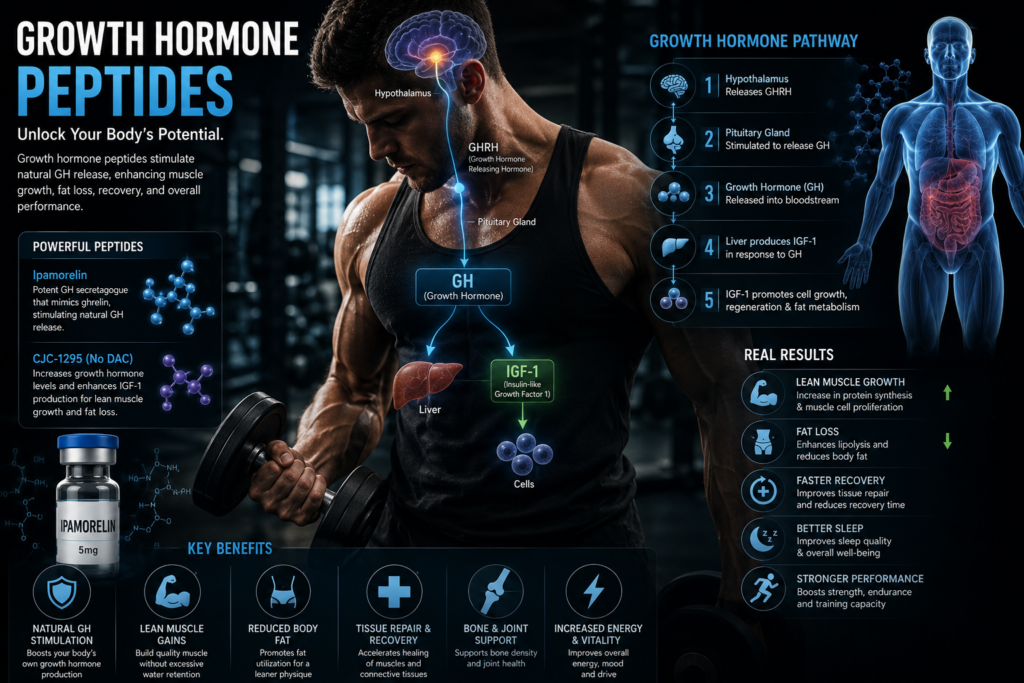
Peptides act like precise messengers. They bind to specific receptors and trigger targeted responses inside cells. For example, growth hormone secretagogues stimulate natural GH release from the pituitary gland.
This selective mechanism is one reason peptides are popular in fitness and recovery research.
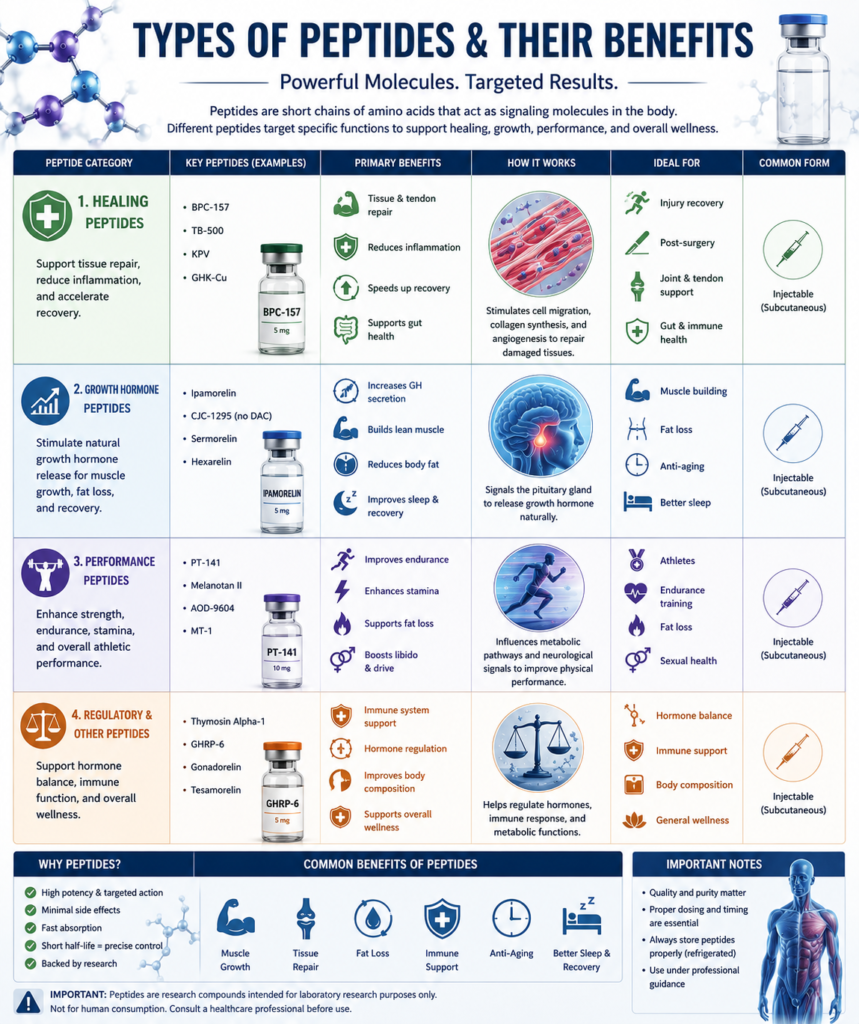
Main Types of Peptides
Common categories include:
- Healing / regenerative peptides (BPC-157, TB-500)
- Growth hormone secretagogues (Ipamorelin, CJC-1295)
- Metabolic peptides (MOTS-C, HGH Fragment 176-191)
Key Benefits Backed by Research
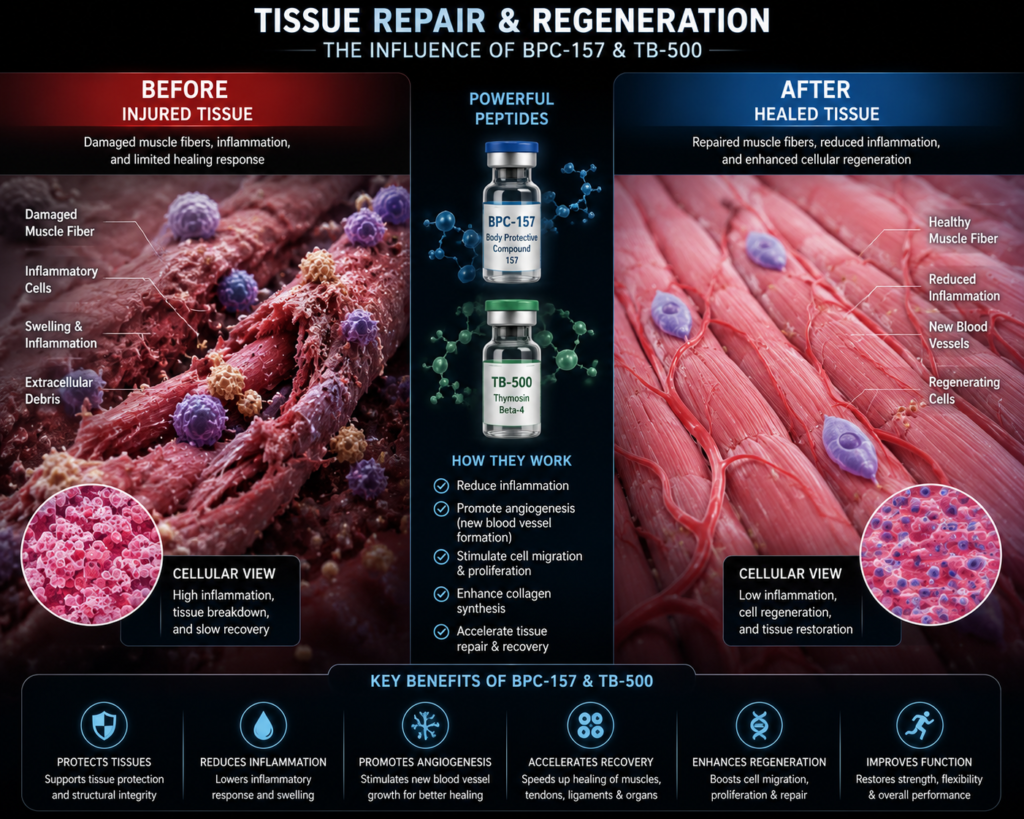
Tissue Repair & Recovery BPC-157 has been researched for its potential to support tendon, muscle, and gut healing through mechanisms like angiogenesis. See preclinical insights on BPC-157.
It is often studied alongside TB-500 (Thymosin Beta-4) 5mg – 1 Vial for broader tissue support.
Muscle Growth & Performance Combinations such as Ipamorelin 10mg – 1 Vial and CJC-1295 DAC 2mg – 1 Vial are widely researched for elevating growth hormone and IGF-1 levels, which may support recovery and body composition goals when paired with training. Bodybuilding peptide overview.
Metabolic Support Peptides like MOTS-C 10mg – 1 Vial and HGH Fragment 176-191 5mg – 1 Vial are studied for roles in fat metabolism and cellular energy.
Additional options such as GHRP-2 10mg – 1 Vial or Melanotan II 10mg – 1 Vial are also available depending on research goals.
Beginner Usage Guidelines
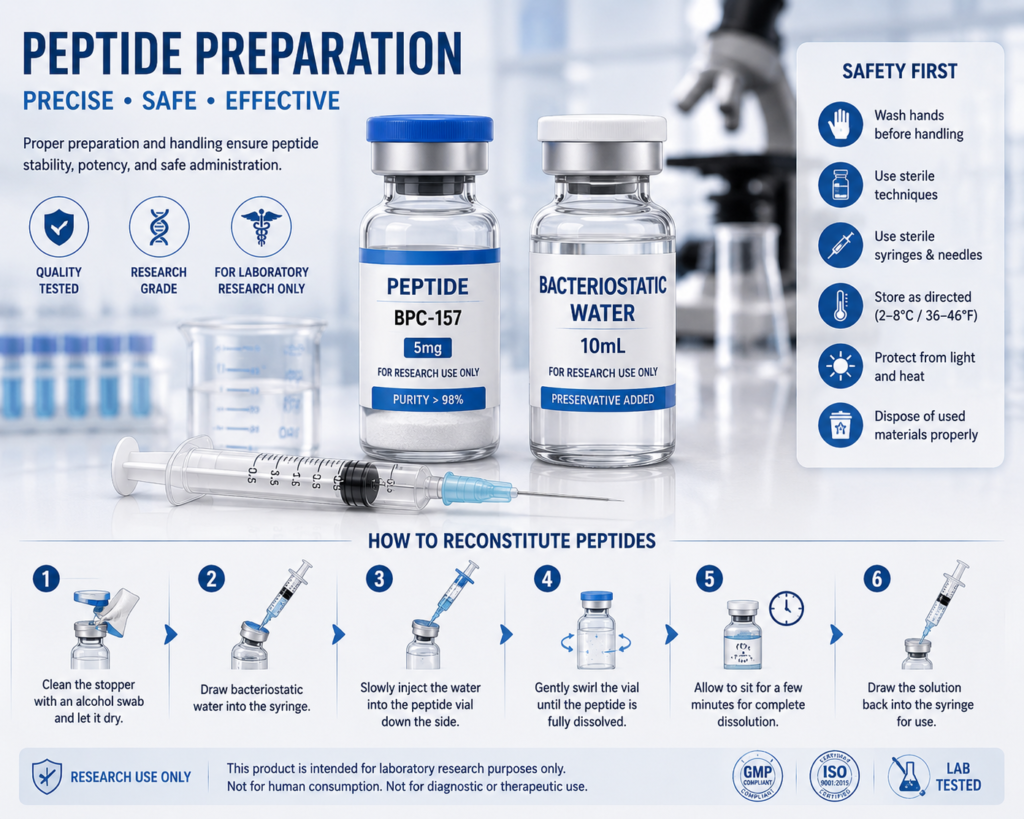
Most research peptides are reconstituted with Bacteriostatic Water 10ml and administered subcutaneously. Start with lower doses to assess tolerance. Proper refrigeration and sterile technique are essential.
Safety and Legal Considerations
While many peptides show promising results in preclinical and early human studies, most are not FDA-approved for performance enhancement or anti-aging. Individual responses vary, and long-term safety data is still limited. Read expert perspectives on peptide therapy safety.
Always consult a healthcare professional. Further safety discussion on peptide therapeutics.
FAQs
Are peptides the same as steroids? No. Peptides are signaling amino acid chains, while steroids act through different hormonal pathways.
How soon can results appear? Some notice recovery benefits within days to weeks; body composition changes typically require consistent use over 4–12 weeks alongside lifestyle factors.
Is peptide use legal? Laws vary by country. Most are sold for research purposes only. Verify your local regulations.
Do I need special storage? Yes — refrigeration after reconstitution and proper sterile handling are essential.
Can I combine different peptides? Stacking is common (e.g., healing + GH peptides), but start simple to assess tolerance.
Conclusion
Peptides represent a fascinating area of research for recovery, performance, and wellness. Whether you’re interested in healing compounds like BPC-157 or growth hormone support like Ipamorelin and CJC-1295, they can be valuable tools when used responsibly.
Explore the full range at HilmaElite’s Peptides category and supporting categories like HGH or Injectables.
Approach with education, realistic expectations, and professional guidance. Stay updated as new research emerges.