
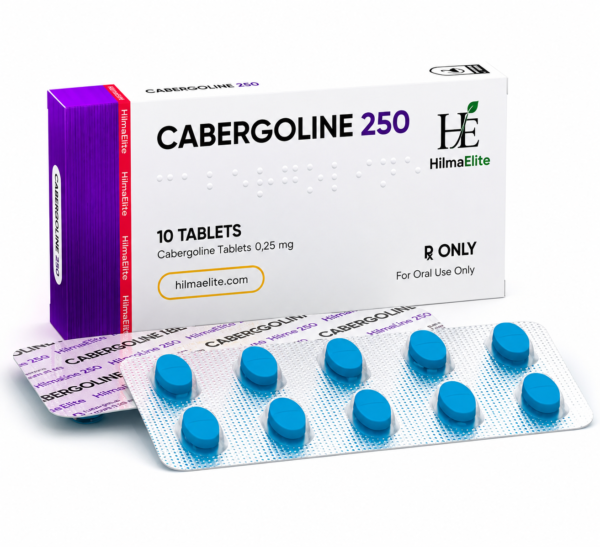
Overview: What Are Cabergoline 0.25 mg Tablets?
Cabergoline 0.25 mg tablets are an oral dopamine agonist designed for targeted pituitary support. Each tablet delivers a measured 0.25 mg dose of active cabergoline, formulated for high oral bioavailability and an extended biological half-life.
Cabergoline works by mimicking dopamine—a naturally occurring brain chemical. By binding selectively to dopamine D2 receptors located in the anterior pituitary gland, it suppresses the synthesis and release of prolactin. Originally developed and marketed under the brand name Dostinex 0.25 mg, cabergoline tablets remain a primary clinical option for conditions where excess prolactin disrupts normal endocrine function.
Key Specifications & Product Details
| Attribute | Specification |
| Product Name | Cabergoline 0.25 mg/tab |
| Active Ingredient | Cabergoline (0.25 mg per tablet) |
| Formulation | Oral Tablets |
| Pharmacological Class | Dopamine D2 Receptor Agonist (Ergoline Derivative) |
| Primary Biological Target | Pituitary Dopamine D2 Receptors |
| Common Brand Equivalent | Dostinex 0.25 mg |
| Half-Life | Long-acting (approx. 63 to 69 hours) |
| Packaging | Sealed pharmaceutical blister/bottle package |
Why People Research Cabergoline 0.25 mg Tablets
Understanding why individuals research or seek to buy cabergoline 0.25 mg tablets comes down to prolactin regulation. Prolactin is a hormone produced by the pituitary gland. While essential for lactation post-pregnancy, elevated prolactin in non-lactating men or women (hyperprolactinemia) causes significant hormonal disruptions.
Real-world research drivers include:
-
Managing Hyperprolactinemia: Lowering pathologically high prolactin levels caused by prolactin-secreting pituitary tumors (prolactinomas) or idiopathic endocrine dysfunction.
-
Hormone Balance & Recovery: Managing secondary hyperprolactinemia resulting from specific medications or exogenous compound use that triggers prolactin elevation.
-
Restoring Reproductive Function: Addressing symptoms of high prolactin, such as irregular menstrual cycles, galactorrhea (unwanted milk production), lowered testosterone, gynecomastia, or decreased libido.
-
Comparing Dosing Options & Pricing: Evaluating the cabergoline 0.25 mg price and low-dose administration protocols compared to higher strength (0.5 mg) options.
The Science Made Simple: How Cabergoline Works
To understand how cabergoline 0.25 mg tablets work, it helps to look at the relationship between dopamine and prolactin in simple terms.
1. Simple Explanation
Think of dopamine as a “brake” on prolactin production in your body. When dopamine attaches to the pituitary gland, it signals the gland to stop making prolactin. If your body does not produce enough natural dopamine signals in that region, prolactin levels rise. Cabergoline acts like dopamine, stepping in to apply the brake and bring prolactin levels back down to a balanced range.
2. Pharmacological & Biological Mechanisms
In technical terms, cabergoline is an ergoline derivative with high affinity and selectivity for dopamine D2 receptors.
-
Receptor Binding: Cabergoline binds directly to D2 receptors expressed on lactotroph cells in the anterior pituitary.
-
Inhibition of Secretion: This binding inhibits adenylate cyclase activity, reduces intracellular cyclic AMP (cAMP) levels, and inhibits exocytosis of stored prolactin.
-
Sustained Action: Unlike short-acting dopamine agonists (such as bromocriptine), cabergoline exhibits slow dissociation from D2 receptors and extensive tissue distribution. This confers an elimination half-life of 63 to 69 hours, allowing for infrequent administration (often once or twice weekly under medical supervision).
3. Why This Matters for This Product
Because Cabergoline 0.25 mg tablets are potent and long-acting, precise dosing is critical. A 0.25 mg tablet strength allows micro-titration—enabling individuals and physicians to manage prolactin effectively without over-suppressing the hormone or overstimulating dopamine pathways.
Practical Considerations & Real-World Decision Support
When evaluating cabergoline 0.25 mg tablets, several practical factors influence decision-making:
-
Precise Low-Dose Titration: A 0.25 mg tablet allows for gradual protocol adjustments. Many clinical guidelines initiate treatment at 0.25 mg once or twice per week to assess tolerance before adjusting the dosage.
-
Tolerability Profile: Low starting doses reduce common dopamine-related side effects such as mild nausea, dizziness, or orthostatic hypotension (lightheadedness upon standing).
-
Monitoring Requirements: Prolactin levels should be verified via blood work (serum prolactin test) prior to starting and periodically throughout use. Self-diagnosing high prolactin based on symptoms alone is unreliable.
-
Product Legitimacy & Quality: Ensuring pharmaceutical purity is essential when purchasing cabergoline tablets online or through pharmacy services.
Important Safety & Medical Context
Cabergoline is a potent endocrine medication and should always be managed with proper healthcare oversight.
-
Contraindications: Cabergoline should not be used by individuals with uncontrolled hypertension, known hypersensitivity to ergot alkaloids, or a history of cardiac valvular disorders or fibrotic disorders.
-
Potential Side Effects: Mild to moderate side effects can include headache, dizziness, fatigue, abdominal pain, and nausea. Taking the tablet with food or at bedtime can help mitigate digestive distress.
-
Cardiac Considerations: High cumulative doses of dopamine agonists have been linked to heart valve issues (valvulopathy). While this risk is primary associated with long-term high-dose treatment for Parkinson’s disease, periodic clinical monitoring remains advisable for long-term users.
-
Drug Interactions: Cabergoline should not be taken concurrently with dopamine antagonists (such as certain antipsychotics or antiemetics like metoclopramide), as they counteract the therapeutic effects of cabergoline.
FREQUENTLY ASKED QUESTIONS
What is Cabergoline 0.25 mg used for?
Cabergoline 0.25 mg tablets are primarily used to treat hyperprolactinemia (excessively high levels of prolactin in the blood). Lowering prolactin helps restore normal gonadal function, normalize menstrual cycles in women, restore testosterone production and libido in men, and manage prolactin-secreting tumors (prolactinomas).
How does Cabergoline 0.25 mg differ from Dostinex 0.25 mg?
Cabergoline 0.25 mg contains the exact same active pharmaceutical ingredient as Dostinex 0.25 mg. Dostinex is the original brand name developed by Pfizer, whereas generic cabergoline tablets provide the equivalent chemical compound, biological mechanism, and dosage strength.
How often are cabergoline 0.25 mg tablets typically taken?
Due to cabergoline’s long elimination half-life (63 to 69 hours), it is rarely taken daily. Standard clinical protocols often begin at 0.25 mg taken once or twice per week. Exact dosage and frequency must always be determined by a qualified physician based on blood lab results.
What should I consider regarding the cabergoline 0.25 mg price?
The price of cabergoline 0.25 mg tablets can vary depending on manufacturer, source legitimacy, and pack size. Because cabergoline is typically administered once or twice weekly rather than daily, a single package of 0.25 mg tablets often lasts significantly longer than daily medications.
Can I buy cabergoline 0.25 mg online safely?
When looking to buy cabergoline 0.25 mg, ensure you obtain verified, pharmaceutical-grade products from reputable suppliers like HilmaElite that disclose exact product specifications, ingredient purity, and proper packaging safeguards. Always consult a healthcare provider before beginning any treatment regimen.
Reviews
There are no reviews yet.