
🚚 Fast & Discreet Delivery
How to Store Peptides Before and After Reconstitution: 9 Essential Storage Tips Every Beginner Should Know
Wondering how to store peptides before and after reconstitution? This beginner-friendly guide explains storage basics, common mistakes, and best practices to help maintain product quality.

If you’ve recently started learning about peptides, you’ve probably asked yourself one important question:
“How should I store them?”
It’s a good question—and one that many beginners overlook.
Proper storage plays an important role in helping maintain the quality of peptide products. However, one thing surprises many people:
There isn’t one storage rule that applies to every peptide.
Some products are supplied as a freeze-dried powder, while others come ready to use as a liquid. Storage recommendations can also change after a product has been reconstituted.
That might sound confusing at first, but don’t worry.
In this guide, we’ll explain everything in simple, everyday language. By the end, you’ll understand why storage matters, what changes after reconstitution, and the common mistakes people should avoid.
Quick Answer
The best way to store a peptide depends on the specific product and the manufacturer’s instructions.
Many peptide products are supplied as a freeze-dried powder, while others are already prepared as liquids or pens.
That’s why it’s important to read the product instructions instead of assuming every peptide should be stored the same way.
If you’re new to peptide therapy, our What Are Peptides? A Beginner’s Guide explains what peptides are and why they’re available in different forms.
Why Does Peptide Storage Matter?
Think about food for a moment.
Some foods can sit safely in your kitchen cupboard.
Others need to stay in the refrigerator.
The same idea applies to many medicines.
Peptides are made from small chains of amino acids—the building blocks that proteins are made from. Because of their structure, some peptide products are more sensitive to heat, moisture, and light than many people realize.
That’s why manufacturers spend a lot of time testing how their products should be stored.
Following those recommendations helps maintain product quality from the time it leaves the manufacturer until it’s ready to be used according to its instructions.
Before Reconstitution vs. After Reconstitution
One of the biggest misunderstandings is thinking that peptide storage never changes.
In reality, manufacturers often provide different recommendations depending on whether the peptide is:
- Still in its original freeze-dried form
- Already supplied as a liquid
- Reconstituted according to the product instructions
That’s why you shouldn’t rely on a single storage chart you find online.
Instead, always look at the information provided with your specific product.
Why Are Many Peptides Sold as a Powder?
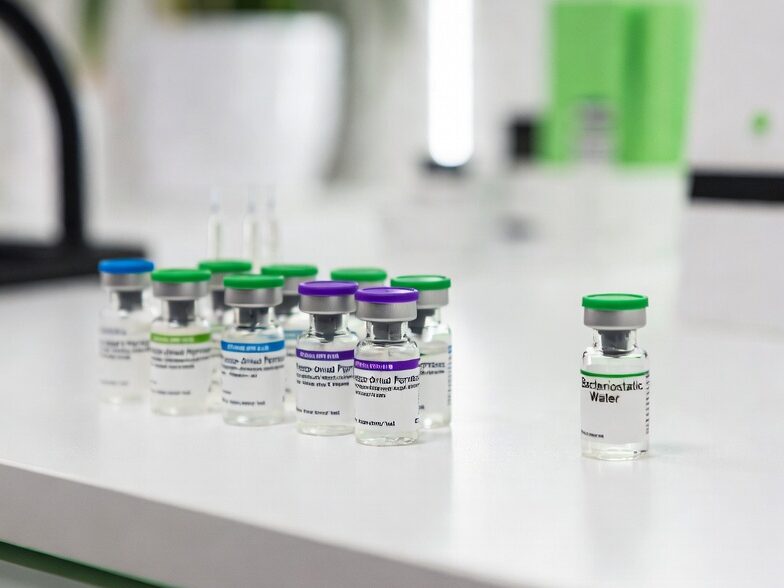
If you’ve ever ordered a peptide, you may have noticed that many products arrive as a small amount of white powder inside a vial.
This is completely normal.
Many peptide products are freeze-dried, a process that removes water while helping preserve the peptide during storage.
Products such as Semaglutide 2mg – 1 Vial, Tirzepatide 10mg – 1 Vial, BPC-157 10mg – 1 Vial, and many other peptide products are commonly supplied in this form before preparation.
If you’re unfamiliar with freeze-dried peptides or the term “reconstitution,” our guide to peptide reconstitution explains why many peptides are supplied this way and what the process means.
What Changes After Reconstitution?
Once a peptide has been reconstituted, its storage recommendations may no longer be the same as they were before.
This doesn’t mean the product is suddenly unsafe—it simply means that different stages of a product’s life may have different storage requirements.
Because every peptide is different, there isn’t one storage rule that applies to every product.
That’s why it’s always best to follow the instructions provided with the product or speak with a qualified healthcare professional if you have questions.
What About Bacteriostatic Water?
If you’ve been researching peptides online, you’ve probably seen people talk about bacteriostatic water.
It’s commonly mentioned because many freeze-dried peptide products are designed to be used with Bacteriostatic Water 10ml, where appropriate for that specific product.
However, it’s important to remember that not every product uses the same diluent or follows the same instructions.
Always rely on the manufacturer’s recommendations instead of advice from social media or online forums.
Common Storage Mistakes Beginners Make
When people are new to peptides, it’s easy to make assumptions.
Some of the most common mistakes include:
- Assuming every peptide should be stored the same way.
- Following advice from social media instead of the product instructions.
- Ignoring storage recommendations on the label.
- Thinking every freeze-dried peptide has identical handling requirements.
- Throwing away the original packaging before reading the instructions.
The good news is that these mistakes are easy to avoid once you understand the basics.
1. Should Peptides Always Be Refrigerated?
This is probably the most common question people ask.
The short answer is:
Not always.
Many people assume every peptide should go straight into the refrigerator, but that isn’t necessarily true.
Some products are designed to be stored at room temperature before they’re prepared, while others may require refrigeration. Once a product has been reconstituted, the storage recommendations may also change.
That’s why the safest approach is always to follow the storage instructions provided with your specific product instead of assuming every peptide has the same requirements.
2. Heat Is One of the Biggest Enemies of Many Peptides
Imagine leaving a chocolate bar inside a hot car on a sunny afternoon.
By the time you come back, it probably won’t look the same.
While peptides are very different from chocolate, the idea is similar.
Many peptide products are sensitive to excessive heat. That’s one reason manufacturers provide specific storage recommendations and advise against exposing products to high temperatures for long periods.
Leaving peptide products in places like:
- A parked car
- Near a heater
- On a sunny windowsill
- Close to kitchen appliances that produce heat
may expose them to conditions that aren’t recommended.
Keeping products in the environment recommended by the manufacturer helps maintain their quality.
3. Light Can Also Affect Some Peptide Products
Heat isn’t the only thing to think about.
Some medicines and peptide products are also sensitive to prolonged exposure to light.
That’s one reason many peptide vials are packaged in protective containers or made with tinted glass.
Keeping products in their original packaging until they’re needed can help provide an extra layer of protection.
It also ensures that important information—such as the product name, batch number, and expiry date—remains available whenever you need it.
4. Moisture Matters Too
Many peptide products are supplied as freeze-dried powders because removing water helps improve stability during storage.
That’s why it’s generally a good idea to avoid storing peptide products in damp environments where unnecessary moisture may become a concern.
A cool, clean, and dry storage area is often a better choice than places with frequent humidity, such as bathrooms.
Again, always follow the manufacturer’s recommendations for your specific product.
5. Keep Products in Their Original Packaging
It can be tempting to throw away the box once you’ve opened a product.
However, the original packaging often contains useful information, including:
- Storage recommendations
- Batch number
- Expiry date
- Manufacturer information
Keeping the original packaging also makes it easier to identify products correctly, especially if you’re using more than one peptide.
Whether you’re researching Semaglutide, Tirzepatide, or Ipamorelin, leaving each product in its original packaging until needed is a simple habit that can help avoid confusion.
6. Traveling With Peptides
Many people wonder whether they can travel with peptide products.
The answer depends on the product and how long you’ll be away.
If you need to travel:
- Keep products in their original packaging.
- Protect them from excessive heat.
- Follow the manufacturer’s storage recommendations during transport.
- If flying, check the airline’s rules for carrying medications and medical supplies.
Planning ahead can help reduce unnecessary stress and ensure your products are stored as recommended throughout your journey.
7. Don’t Rely on Social Media Storage Advice
Search online and you’ll find hundreds of videos claiming to show the “correct” way to store peptides.
The problem is that many of these videos speak as though every peptide is identical.
They’re not.
Different manufacturers may have different formulations, packaging, and storage recommendations.
That’s why product instructions should always take priority over advice from influencers, discussion forums, or anonymous online comments.
8. What If You’re Not Sure?
There’s no shame in asking questions.
If you’re ever unsure about how a peptide should be stored, the best sources of information are:
- The product packaging
- The manufacturer’s instructions
- A qualified healthcare professional
- A licensed pharmacist
These sources are far more reliable than random advice found online.
A Simple Way to Remember
If you only remember three things from this guide, make them these:
✔ Read the product instructions.
✔ Protect peptide products from unnecessary heat, light, and moisture where recommended.
✔ When you’re unsure, ask instead of guessing.
Those three habits can help you avoid many of the most common storage mistakes.

Frequently Asked Questions
Can all peptides be stored the same way?
No.
Even if two peptide products look similar, they may have different storage recommendations. That’s because manufacturers can use different formulations, packaging, and stability testing.
The safest approach is always to follow the storage instructions provided with your specific product instead of assuming every peptide should be handled the same way.
Does storage change after reconstitution?
It can.
Many freeze-dried peptides have different storage recommendations after they have been reconstituted. Because these recommendations vary from one product to another, it’s important to follow the manufacturer’s instructions rather than relying on general advice.
If you’re still learning about this process, our guide to peptide reconstitution explains what reconstitution means and why many peptides are supplied as freeze-dried powders.
What is bacteriostatic water?
Bacteriostatic Water 10ml is a sterile water product that contains a small amount of benzyl alcohol to help reduce bacterial growth after opening. It’s commonly used with certain medications when specified by the manufacturer. Always check your product instructions to confirm the appropriate diluent for your peptide.
Should I keep peptide products in their original packaging?
Yes.
Keeping products in their original packaging helps protect them and ensures important information—such as the product name, batch number, expiry date, and storage recommendations—is always easy to find.
Can I travel with peptide products?
In many cases, yes, but the best approach depends on the specific product.
If you’re planning a trip, keep products in their original packaging, protect them from unsuitable storage conditions during transport, and follow any instructions provided by the manufacturer. If you’re flying, it’s also a good idea to check your airline’s policies for carrying medications and medical supplies.
Where can I learn more about peptides?
If you’re just getting started, these beginner-friendly guides are a great next step:
- What Are Peptides? A Beginner’s Guide
- Weight Loss Peptides Explained
- Semaglutide vs. Tirzepatide: Which Weight Loss Treatment Is Right for You?
Each article explores a different topic while building on the information you’ve learned here.
Key Takeaways
Before you leave, here are the most important things to remember:
- Different peptides may have different storage requirements.
- Storage recommendations can change after reconstitution.
- Keep products in their original packaging whenever possible.
- Protect peptide products from unsuitable heat, light, and moisture where recommended.
- Don’t rely on social media for storage advice—always follow the manufacturer’s instructions.
- If you’re unsure, ask a qualified healthcare professional or contact the manufacturer.
Understanding these simple principles can help you store peptide products more confidently and avoid common mistakes.
Final Thoughts
Learning how to store peptides correctly doesn’t have to be complicated.
The most important thing to remember is that there isn’t a single storage rule for every product. Different peptides may have different requirements before and after reconstitution, which is why reading the manufacturer’s instructions is always the safest approach.
As you continue learning about peptide therapy, you’ll come across many different products, each designed for specific purposes. Whether you’re researching Semaglutide , Tirzepatide, BPC-157 10mg – 1 Vial, or other peptide therapies, understanding proper storage is an important part of using these products responsibly.
The more you understand about peptides, the easier it becomes to separate reliable information from myths and misinformation online. Taking a few minutes to read the product instructions today can help you make more informed decisions tomorrow.